01
How Much Does a Water Softener Installation Cost in Goodyear?
grain capacitysalt-based softenerGoodyear water hardness
Water softener installation cost in Goodyear typically ranges from $800 to $3,200 depending on system size, type, and whether a soft water loop already exists.
A 32,000-grain salt-based softener installed on an existing loop runs roughly $800–$1,500. Step up to a 48,000- or 64,000-grain unit for a larger household and the home water softener cost rises to $1,500–$2,500. Salt-free systems cost more upfront — usually $1,800–$3,200 for a whole house water softener system. Because Goodyear water hardness averages 16–25 grains per gallon, most families need at least a 40,000-grain capacity unit, which pushes the new water softener cost toward the middle of those ranges. Loop installation adds $300–$600 if one isn't already in place.
02
Do You Install Water Softeners Near Me in Goodyear?
Goodyear zip codesEstrellaVerradoservice radius
Yes — licensed plumbers in our network cover every Goodyear neighborhood, including Estrella Mountain Ranch, Verrado, Palm Valley, Pebblecreek, and Goodyear Village, across zip codes 85338 and 85395.
Most water softener installation near me requests are scheduled within 2–3 business days, with same-week slots often available for standard loop-connected installs. Our service radius also extends to parts of Avondale and Litchfield Park when capacity allows. When you search for the best water softener installers near me in Goodyear, our dispatch team matches you with a local plumber who already understands the city's municipal water profile — so there's no learning curve on hardness settings or permit questions.
03
What's Included in Professional Water Softener Installation?
bypass valvebrine tankresin tank
Professional water softener installation covers more than dropping a unit in the garage.
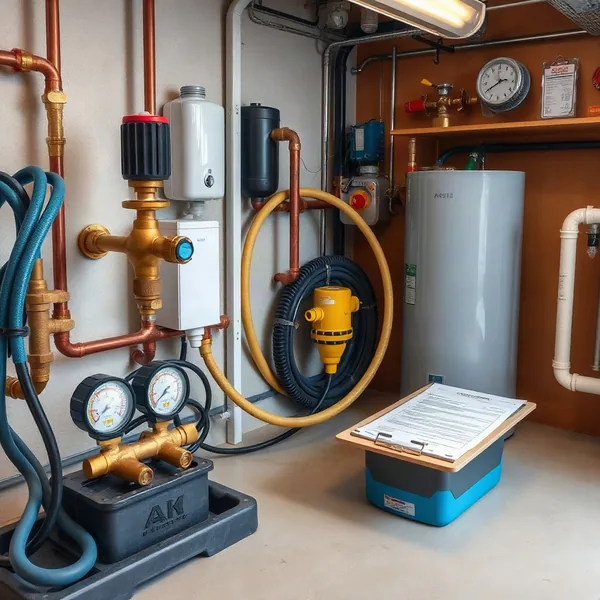
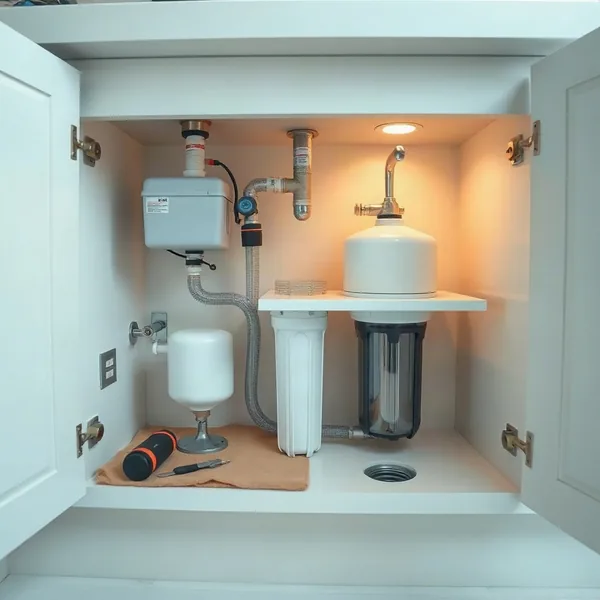
A licensed plumber shuts off the main supply, cuts into the cold-water line, and connects the resin tank — which holds the ion-exchange media that strips calcium and magnesium from the water. The brine tank is positioned nearby, filled with the initial salt charge, and plumbed to the drain. A bypass valve is fitted so the homeowner can isolate the system for maintenance without cutting water to the house. The plumber then programs the control head for Goodyear's hardness level, runs a full regeneration cycle to verify flow, and confirms the water softener setup is leak-free before signing off. Filter installation can be added at the same appointment.
04
Water Softener Loop, Hookup & Setup: What to Expect
copper loop1-inch supply lineinstall diagram
A water softener loop is a pre-installed segment of copper pipe — usually a 1-inch supply line stub-out in the garage — that builders add specifically for future softener hookup.
When a loop exists, the water softener hookup takes 2–3 hours and costs noticeably less because no new plumbing is required. Without one, the plumber runs new copper loop from the main line, which adds 3–5 hours and $300–$600 to the total. Many Goodyear homes built after 2005 include a loop, but older properties in established neighborhoods often don't. Before scheduling, the plumber reviews a water softener install diagram of your utility area to confirm pipe sizing and drain proximity, then selects the appropriate water softener installation kit for the connection type.
05
Whole-House vs Single-Point Water Softener Systems
whole-house systempoint-of-entryaffordable models
A whole-house water softener system treats every drop of water that enters the home at the point of entry — protecting pipes, water heaters, and appliances simultaneously.
It's the most effective solution for Goodyear's 16–25 GPG hardness levels. Single-point units, by contrast, treat water at one faucet or appliance only, which leaves the rest of the plumbing exposed to scale. Whole-house water softener system installation costs more upfront but delivers far greater long-term protection. For budget-conscious homeowners, affordable models in the 32,000-grain range start around $400–$700 for the unit alone. Salt-free whole-house systems condition rather than remove minerals — they're lower maintenance but less effective at the hardness levels common in Goodyear.
06
Can I Install a Water Softener Myself, or Should I Hire a Pro?
DIY install kitplumbing codewarranty voidance
DIY water softener installation is possible with a basic DIY install kit on a pre-existing loop, but the risks are real.
Incorrect bypass valve connections can allow untreated water to mix with softened lines. Cutting into copper or PEX supply piping without experience often causes slow leaks inside walls. Arizona plumbing code requires licensed work for any modification to a home's main supply line, so an unpermitted DIY install can create issues at resale. More critically, most manufacturer warranties explicitly require installation by a licensed plumber — so a DIY install on a $1,500 unit can void the entire coverage. Easiest water softener to install setups still carry these risks if the underlying plumbing isn't already loop-ready.
07
When Should You Replace an Old Water Softener?
resin degradationsalt bridging10-year lifespan
Replacing a water softener makes sense once a unit crosses the 10-year mark or shows performance decline that salt adjustments can't fix.
Resin degradation is the most common culprit — over time, the ion-exchange beads in the resin bed break down, lose capacity, and let hardness minerals pass through untreated. You'll notice scale returning on fixtures even though the unit is running. Salt bridging — a hardened salt crust that forms in the brine tank and blocks brine from reaching the resin — is another warning sign, though it can sometimes be cleared manually. If bridging recurs repeatedly or the unit requires regeneration cycles more than twice a week, the economics of repair versus replacement usually favor a new system after a decade of use.
08
Water Softener Installation FAQs
owner's manualregeneration cycle
One question we hear often: does the owner's manual really matter?
Yes — it specifies the correct hardness setting, regeneration cycle frequency, and salt type for your exact unit. Programming it wrong for Goodyear's water hardness (GPG range of 16–25) causes over-regeneration, wasting salt and water. Another common question: how often should regeneration run? Most households in this area set cycles every 3–7 days depending on daily water use and grain capacity. Units certified to NSF/ANSI Standard 44 are independently tested for softening performance and efficiency — always confirm your unit carries that certification before purchase. Your assigned plumber walks through each of these points during the post-install review.