01
What Are the Warning Signs of a Slab Leak?
warm floor spotsfoundation crackswater meter test
A slab leak usually announces itself through a cluster of small but persistent signals — none alarming on its own, but serious when two or more appear together.
Warm floor spots on tile or hardwood are one of the earliest giveaways, caused by hot water escaping from a pipe beneath your concrete slab foundation. Watch for unexplained mold or musty odors at baseboards, water stains on flooring, or foundation cracks forming along walls. A water meter test is the simplest self-check: turn off every fixture, note the meter reading, wait 30 minutes without using any water, and recheck — any movement confirms a hidden leak. A spike of 20% or more on consecutive bills without a change in habits is equally telling. Catch it early and you limit the damage significantly.
02
How Much Does Slab Leak Detection Cost in Goodyear?
flat diagnostic feeaccessibility factor
Slab leak detection cost in Goodyear typically falls between $150 and $400 for the diagnostic visit, separate from any repair work.
Most licensed plumbers in our network charge a flat diagnostic fee that covers pressure testing and electronic scanning of your pipe runs. Several factors push that number higher: larger homes require more pipe coverage, older copper lines under a thick slab demand more time, and difficult accessibility — finished floors, furniture-heavy rooms, or tight crawl spaces — adds to labor. Conversely, a newer home with exposed utility areas and short pipe runs often lands at the lower end. That fee always includes a marked floor report showing exactly where the leak sits, so there are no surprises when repair estimates follow.
03
Can You Find a Slab Leak Without Breaking My Floor?
acoustic listening deviceelectronic amplificationtracer gas
Yes — under slab leak detection today is almost entirely non-invasive, and no concrete needs to be cut just to find the problem.
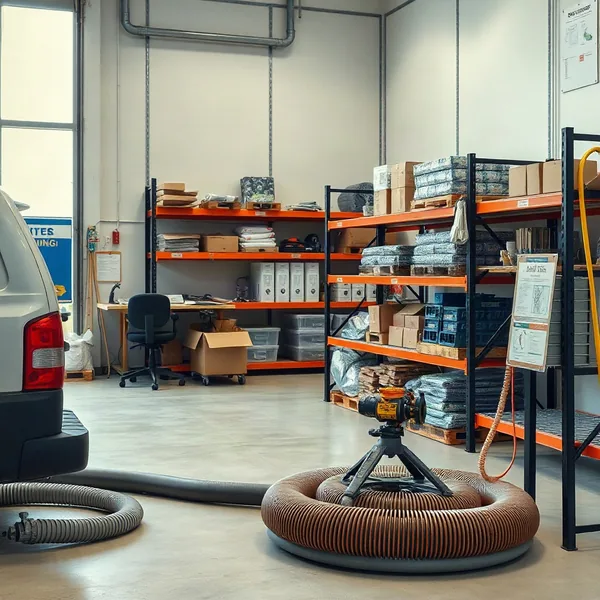
Licensed plumbers in our Goodyear network use three primary tools. An acoustic listening device is pressed against the floor surface to amplify the sound of pressurized water escaping through even a hairline crack several inches below. Electronic amplification, delivered through electronic leak detection equipment, traces the pipe's electromagnetic signature and identifies where pressure drops sharply. When a hot-water line is involved, a thermal imaging camera detects the temperature anomaly rising through the slab. For cases where pipe routing is unclear, tracer gas — a safe helium-hydrogen blend — is introduced into the line and detected at the surface. Together these methods pinpoint the leak without a single jackhammer stroke.
04
What Happens During a Slab Leak Detection Visit?
pressure testthermal imaging camerapinpoint marking
A slab leak detection visit follows a reliable sequence that typically runs 1.5 to 3 hours.
The plumber starts with a water pressure test: both the hot and cold lines are isolated and pressurized to confirm a leak exists and to identify which side is affected — this step takes about 20 to 30 minutes. Next, a thermal imaging camera scans the floor for heat anomalies along the suspected pipe route, narrowing the search zone to a few feet. Acoustic and electronic tools then zero in on the exact breach point. Once confirmed, the plumber uses spray paint or chalk for pinpoint marking directly on your slab surface. You leave the visit with a written report, a marked floor, and repair cost options — not a torn-up house.
05
Slab Leak Detection vs. Slab Leak Repair: What's Next?
reroute optionepoxy pipe lining
Detection findings directly shape which repair path makes sense, and there are three main routes.
If the leak is isolated and the pipe is otherwise sound, a targeted saw-cut and spot repair is the least disruptive fix — typically completed in a single day. When pipe condition is poor throughout, a reroute option avoids the slab entirely by running new lines through walls or the attic, which costs more upfront but eliminates repeat failures. For lines that are structurally intact but corroded inside, epoxy pipe lining coats the interior without any cutting at all. The choice also depends on whether your system uses copper vs PEX under-slab lines — older copper corrodes from the outside in, while PEX typically fails at fittings, and each scenario affects how aggressively you need to act.